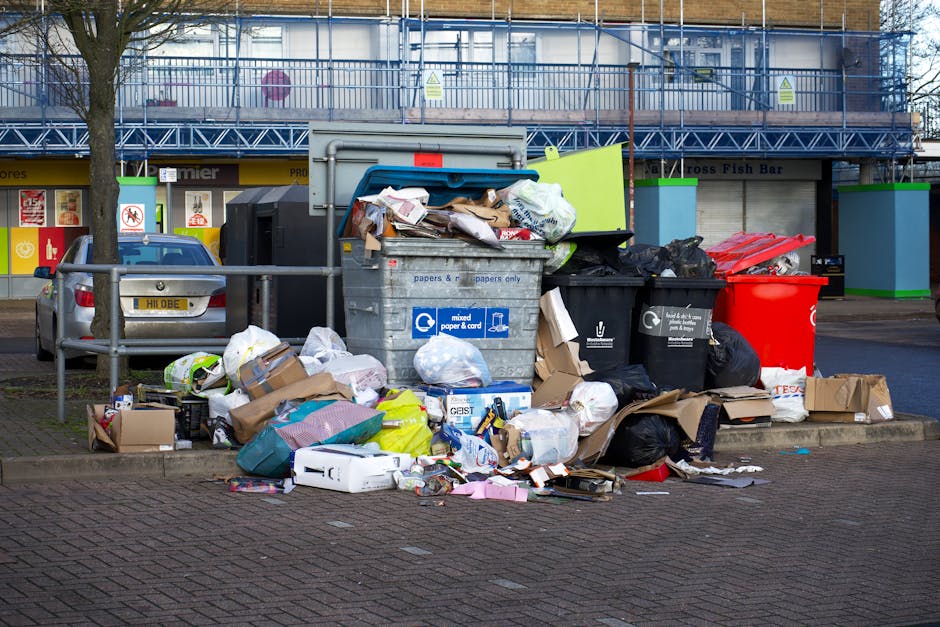
Where to Dispose Bulky Waste in IG7 (Chigwell) Fast
If you need to clear a sofa, mattress, wardrobe, broken appliance, or a few awkward items from a property in IG7, speed matters. Delays quickly turn into clutter, blocked hallways, missed handovers, and unnecessary stress. The good news is that there are several practical ways to handle bulky waste in Chigwell quickly, and the best option depends on what you are disposing of, how much there is, and how urgently you need it gone.
This guide explains where to dispose bulky waste in IG7 (Chigwell) fast, what counts as bulky waste, how the main disposal routes compare, and how to choose the simplest, safest route for your situation. You will also find a step-by-step process, a realistic comparison table, compliance guidance, and a checklist you can use before booking anything. If you are sorting out a home, flat, garage, loft, or office, you may also find it useful to explore related services such as furniture clearance, house clearance, or broader waste removal support.
In practical terms, the fastest answer is usually one of three things: a local waste clearance service, a pre-arranged council or depot drop-off route where available, or a DIY hire-and-load solution if you already have transport. The right choice is not just about speed; it is about what gets removed legally, safely, and without a second trip. That second trip is always the one that gets you.
Table of Contents
- Why fast bulky waste disposal in IG7 matters
- How the disposal process works
- Key benefits and practical advantages
- Who needs this and when it makes sense
- Step-by-step guidance
- Expert tips for better results
- Common mistakes to avoid
- Tools, resources and recommendations
- Law, compliance and best practice
- Options and comparison table
- Case study or real-world example
- Practical checklist
- Conclusion
- Frequently asked questions
Why Where to Dispose Bulky Waste in IG7 (Chigwell) Fast Matters
Bulky waste is not just "large rubbish". It is the kind of item that takes up space, is awkward to move, and often cannot be handled by an ordinary household bin collection. Think sofas, dining tables, cabinets, mattresses, garden furniture, broken shelving, office chairs, large toys, and similar items. In some cases, it also includes dismantled timber, large appliances, or mixed household items that are too big for regular bins.
For many people in IG7, the issue is time-sensitive. You might be preparing a property for sale, making room for new furniture, finishing a tenancy, clearing a loft before builders arrive, or simply trying to regain usable space without dragging the job out for days. Fast disposal matters because bulky waste tends to get in the way quickly. It blocks access, collects dust, complicates moving day, and makes a space feel unfinished.
There is another reason speed matters: bulky items often become a safety issue. A leaning wardrobe in a hallway, a cracked cabinet in a garage, or stacks of broken furniture in a garden can create trip hazards and make access difficult. In busy homes and workplaces, that is more than an inconvenience. It is a practical risk.
When people search for where to dispose bulky waste in IG7 (Chigwell) fast, they usually want a simple answer: what can I do today or tomorrow? That is the real intent behind the search, and it is exactly why a clear plan is more useful than a generic list of disposal options.
If your waste is tied to a larger project, it can help to think about the setting too. A flat clearance, for example, has different access challenges than a garage clearance. A business may also need a smoother booking and collection window, which is where business waste removal and office clearance can be more efficient than handling everything item by item.
How Where to Dispose Bulky Waste in IG7 (Chigwell) Fast Works
The process is straightforward once you understand the choices. Fast bulky waste disposal usually falls into one of these routes:
- Book a local clearance service for quick collection from your property.
- Use a council-approved or local transfer route if you are able to transport the items yourself.
- Hire transport and load the items yourself if you have access to a suitable vehicle and lifting help.
Each route has a different balance of speed, convenience, and effort. A professional service is often the quickest overall because you do not need to hire a van, lift heavy items, or wait around for a full day of DIY sorting. In many real-world cases, one truck and one team can solve what would otherwise take a weekend.
The best approach usually starts with a quick audit of the items. Ask yourself:
- What exactly needs removing?
- How many large items are there?
- Do any items need dismantling first?
- Are there stairs, narrow doors, or parking restrictions?
- Do you need same-day or next-day clearance?
These details matter because bulky waste is rarely "just a sofa". It may be a sofa plus cushions, a bed frame, a mattress, a side table, and some smaller mixed debris. If you are clearing out a room or an entire property, you may find a related service such as home clearance or flat clearance more efficient than piecemeal disposal.
In practical terms, a fast service will usually ask for photos, item counts, access details, and the collection address. That allows a clearer quote and a more accurate booking window. If you want to understand pricing and what affects it, the pricing and quotes page is a sensible place to start.
Key Benefits and Practical Advantages
The biggest benefit of fast bulky waste disposal is obvious: you get your space back sooner. But the real value goes beyond tidiness.
- Less disruption - rooms can be used again, access is restored, and work can continue.
- Reduced physical strain - no wrestling heavy items through tight spaces.
- Fewer delays - ideal before moving day, end-of-tenancy deadlines, or tradespeople arriving.
- Cleaner, safer premises - especially where broken furniture or stacked items are causing hazards.
- Better sorting and recycling outcomes - a good clearance provider can separate reusable and recyclable materials.
For many households, the hidden advantage is peace of mind. Bulky waste tends to linger because people postpone dealing with it. Once the decision is made, everything else becomes easier. You can clean properly, plan the room layout, and stop stepping around the same item for another two weeks.
For businesses, the benefit is often operational. An office that removes unwanted desks or chairs quickly is easier to reorganise. A shop or storage space can be reset faster. If the items are part of a broader commercial clearance, combining them with commercial waste removal can keep the process tidy and more predictable.
There is also a sustainability angle. Reuse and responsible recycling are much better outcomes than letting usable items sit unused or sending everything to disposal by default. If that matters to you, look for a provider with a clear commitment to recycling and sustainability.
Who This Is For and When It Makes Sense
Fast bulky waste disposal is useful for a surprisingly wide range of people. It is not only for large clearances or renovation projects.
Common situations where it makes sense
- Moving home and needing heavy items removed before completion day
- Clearing an empty rental or end-of-tenancy property
- Replacing old furniture and wanting the old pieces gone immediately
- Sorting a garage, loft, shed, or spare room
- Preparing for decorating, repairs, or refurbishment
- Removing office furniture or storage items from a workplace
- Clearing garden furniture or broken outdoor items after a season change
If your home has multiple areas to clear, then a combined service can be more efficient. For example, a property with boxed loft items, a cluttered garage, and a couple of large sofas may be better handled as a full house clearance or loft clearance rather than three separate visits.
It also makes sense when access is awkward. A single bulky item may sound manageable until you have to turn it down a narrow landing or carry it from a top-floor flat. In those situations, local expertise and the right equipment are worth far more than simply having a van.
Step-by-Step Guidance
If you want the fastest route without needless back-and-forth, follow this process.
- List the items clearly. Include type, number, and approximate size. A sofa bed and a standard two-seater are not the same job.
- Check what needs dismantling. Wardrobes, bed frames, and certain desks may be easier to remove in parts.
- Take a few photos. Images help a clearance team judge volume, access, and loading needs.
- Note access details. Mention stairs, parking, alleyways, limited lift access, or controlled entry points.
- Decide your timeline. Same-day, next-day, or a planned collection? Be honest about urgency.
- Ask how items will be handled. Reuse, recycling, and disposal should all be part of the picture.
- Confirm the quote and terms. Make sure you know what is included before the visit.
- Prepare the items. Empty drawers, remove personal belongings, and clear a path to the collection point.
A useful trick is to separate items into "definitely going" and "maybe going". That keeps the collection focused and reduces decision fatigue on the day. If you are dealing with mixed household contents, a broader furniture disposal arrangement may be more practical than booking by item.
For garden-related clutter, broken benches, and outdoor storage pieces, garden clearance can be a good fit. For a garage full of old tools, boxes, and unwanted furniture, garage clearance may save a lot of sorting time.
Expert Tips for Better Results
Small decisions make a big difference when you want bulky waste removed quickly and cleanly.
- Measure large items before collection. A few centimetres can matter on stair turns and through doorframes.
- Group items by room. It helps the team move efficiently and reduces missed pieces.
- Photograph anything unusual. Broken glass, sharp metal, water damage, or heavy solid wood all affect handling.
- Ask about donation or reuse potential. Some items may be suitable for a second life if they are in reasonable condition.
- Book earlier in the day if possible. It gives more room to solve access issues without rushing.
- Keep essentials separate. In lofts and garages, useful items can be hidden among waste. A quick sort saves mistakes.
In our experience, the smoothest jobs are the ones where the customer has already made a few simple decisions. They do not need to fully sort the entire room. They just need to know what is staying, what is going, and what might require special handling.
If you are trying to move fast but still care about trust and security, it is sensible to review a provider's insurance and safety information and their health and safety policy. Those pages should help reassure you that the work will be handled properly and with care.
Common Mistakes to Avoid
Most bulky waste delays come from simple, avoidable mistakes.
- Underestimating the size of the load. What looks like "a couple of items" can turn into a full van once it is all together.
- Leaving access details out. A team arriving without the right information wastes time for everyone.
- Mixing keep and remove piles. This is how good items accidentally disappear.
- Waiting until the last minute. Urgent jobs can still be handled, but the options are narrower.
- Assuming every item can go anywhere. Some goods need separate handling, especially if they contain electrical parts or hazardous materials.
- Choosing a provider without checking what is included. If dismantling, loading, or heavy lifting are excluded, the job can become more expensive than expected.
A surprisingly common issue is failing to think about where the item ends up after collection. If the items are going to be reused, recycled, or sorted, that process should be clear. If a service seems vague about disposal, ask for clarification. A proper answer is usually simple and direct.
Tools, Resources and Recommendations
You do not need specialist equipment to arrange bulky waste disposal, but a few basics help the process run smoothly.
| Helpful tool or resource | Why it helps | Best for |
|---|---|---|
| Measuring tape | Checks whether items fit through doorways or in vehicles | Wardrobes, sofas, bed frames |
| Mobile phone camera | Provides fast visual information for quoting | All bulky waste jobs |
| Marker labels or notes | Separates keep and remove items | Mixed room clearances |
| Gloves and sturdy shoes | Improves safety while sorting or moving light items | Lofts, garages, gardens |
| Collection checklist | Reduces forgotten items | Whole-home and office jobs |
For many readers, the most useful resource is simply a service that offers clear communication and realistic scheduling. If you are comparing providers, check whether they explain the collection process, expected arrival windows, payment options, and any special handling requirements. The payment and security page is useful if you want to understand how a provider approaches customer confidence and transactions.
It can also help to know who you are dealing with. An established local business with a transparent about us page and clear contact details usually gives you a better sense of accountability than a vague listing. If you need to ask a question before booking, use the contact page rather than guessing.
Law, Compliance, Standards, or Best Practice
Bulky waste disposal should be handled responsibly. While the exact rules depend on the item and the route you choose, there are some good-practice points that apply almost everywhere in the UK.
- Use a legitimate carrier or disposal route. Do not hand items to someone who cannot explain where they go.
- Keep a record if needed. For business, landlord, or repeat-property jobs, documentation is often helpful.
- Separate special waste appropriately. Electrical items, liquids, and certain construction materials may need different treatment.
- Avoid fly-tipping risk. If someone offers a suspiciously cheap clearance and avoids paperwork, that is a red flag.
- Respect site safety. If items are in a loft, garage, or tight stairwell, they should be handled carefully to avoid damage or injury.
For homeowners, the main takeaway is simple: choose a route that is traceable, safe, and proportionate to the item. For businesses or landlords, that standard is even more important because responsibility often extends beyond just "getting rid of it".
If you want a provider that is transparent about operational standards, their insurance and safety information and terms and conditions are worth reviewing before you book. If sustainability matters to your decision, the recycling and sustainability page can also help you judge whether the service aligns with your expectations.
Options, Methods, or Comparison Table
Here is a practical comparison of the main ways to dispose of bulky waste in IG7 quickly.
| Method | Speed | Effort | Best for | Notes |
|---|---|---|---|---|
| Local clearance service | Fastest for most people | Low | Single items, multiple items, awkward access | Ideal when you want collection from the property |
| Self-transport to a disposal site | Fast if you already have a vehicle | High | Small loads, confident DIY movers | Requires lifting, loading, and checking site rules |
| Arrange a broader clearance | Fast for larger jobs | Low to medium | Homes, flats, offices, mixed rooms | Often best for more than a few bulky items |
| Wait for a routine collection slot | Slower | Low | Non-urgent disposal | Not ideal when time is tight |
For a lot of IG7 households, the first option wins because it reduces effort and avoids the logistics headache. For a larger property or a mixed clear-out, combining item removal with home clearance or house clearance is often the most sensible route. If the waste came from a renovation, builders waste clearance may be the better fit.
Case Study or Real-World Example
Consider a typical IG7 scenario. A family is preparing to redecorate a downstairs room and wants an old corner sofa, two broken chairs, a coffee table, and a stack of damaged shelving removed before the decorators arrive. The room is on the ground floor, but access is tight through a narrow hallway.
If they tried to manage it themselves, they would need a van, a couple of strong helpers, and probably a second attempt if the items did not fit as expected. They would also need time to sort transport, load everything, and deal with disposal. That is fine if the job is small and you are not under pressure. But with a decorator booked, there is not much room for error.
In this kind of situation, the better solution is a fast collection arranged in advance. Photos of the items, a note about hallway width, and confirmation that the sofa can be moved intact or dismantled are usually enough to plan the job properly. The result is simple: the room is clear, the decorators can start, and no one spends the afternoon circling the block looking for parking for a loaded van.
A different version of the same story happens in offices. Desks, filing cabinets, and chairs often pile up after a layout change. In that case, a targeted office clearance or business waste removal service keeps the move quick and orderly.
Practical Checklist
Use this checklist before booking or collecting bulky waste in IG7:
- Identify each item that needs to go
- Measure the largest items if access is tight
- Take clear photos from more than one angle
- Check whether any items should be dismantled
- Separate items you are keeping
- Confirm stairs, parking, and entry details
- Ask about timing and collection window
- Check what happens to reusable or recyclable items
- Review quote terms and payment details
- Prepare a clear path to the items on collection day
Quick takeaway: the fastest bulky waste disposal is the one that is planned just enough to avoid surprises, but not so overcomplicated that it slows you down. A few photos, a clear item list, and honest access details usually make all the difference.
Conclusion
If you are trying to work out where to dispose bulky waste in IG7 (Chigwell) fast, the answer usually comes down to convenience, access, and how urgently you need the space back. For a single awkward item, a straightforward collection can be enough. For a full room, garage, loft, or office clear-out, a more complete service is often the quickest and least stressful route.
The smartest approach is to choose a disposal method that fits the scale of the job rather than forcing a one-size-fits-all solution. That means checking the item list, understanding access, and choosing a provider or method that can handle the work safely and efficiently. If you value speed, clarity, and minimal disruption, a professional clearance option is often the best fit.
Get a free quote today and see how much you can save.
Frequently Asked Questions
What counts as bulky waste in IG7?
Bulky waste usually means large household or business items that are too big for normal bin collection. Common examples include sofas, wardrobes, mattresses, tables, chairs, shelving, and large broken items.
What is the fastest way to get bulky waste removed in Chigwell?
For most people, the fastest route is a local clearance service that collects directly from your property. It avoids the need to hire transport, load heavy items yourself, or make a separate drop-off trip.
Can I dispose of a sofa or mattress quickly?
Yes. These are among the most common bulky items removed quickly. The main factors are access, item condition, and whether you need dismantling or help carrying it downstairs.
Is it cheaper to take bulky waste myself?
Sometimes, but only if you already have suitable transport and help. Once you factor in time, fuel, loading effort, and the risk of needing a second trip, a collection service can be better value than it first appears.
Can bulky waste be collected from a flat or upper floor?
Yes, but access matters. Stairs, lifts, narrow hallways, and parking restrictions can affect how the job is planned. A good provider will usually ask for photos or access details first.
What should I do before booking a bulky waste collection?
Make a clear list of the items, measure anything especially large, take photos, and note access information. That makes quotes more accurate and reduces the chance of delays on the day.
Can I mix furniture, garage junk, and garden waste in one collection?
Often yes, provided the provider accepts mixed loads and the materials are suitable together. For example, a mix of old furniture and garage clutter may be handled as part of a broader clearance, while some special items may need separate treatment.
Do I need to dismantle bulky furniture first?
Not always. Some items can be removed intact, while others are easier and safer to handle in parts. If you are unsure, ask before the collection rather than guessing.
How do I know a bulky waste service is legitimate?
Look for clear contact details, transparent terms, a proper quote process, and straightforward information about safety and disposal. If a service cannot explain where items go, that is a warning sign.
What happens to bulky waste after collection?
That depends on the item and the provider's process. Good services aim to reuse or recycle items where possible and send only the unavoidable remainder for disposal.
Is bulky waste disposal different for businesses?
Yes, businesses often need a more structured approach because of access, scheduling, documentation, and operational continuity. Office furniture and commercial items are usually better handled through a business-focused clearance service.
Where can I get more information before booking?
You can review the provider's service pages, pricing details, safety information, and contact options. If you are comparing options, start with their main website, then check the service that matches your job best.