Office Clearance in Chigwell

Office clearance in Chigwell means clearing workspaces in a way that is orderly, practical and suited to commercial premises of different sizes. We handle the removal of desks, chairs, storage units, filing items and mixed office contents, with careful attention to access, separation of reusable materials and the final condition of the space. The service is designed for businesses that need a clear, workable outcome rather than a rushed emptying process, whether the task involves a single room or a larger suite.
Our approach focuses on making the clearance straightforward for managers, landlords and tenants who want to move ahead without unnecessary disruption. The right plan depends on what is being removed, how it is stored, and whether items need to be sorted for recycling, reuse or disposal. If you are comparing options, it is sensible to start with the type of furniture and equipment on site and then decide how much of the load should be taken in one visit. Requesting a quotation is the best next step when you want the work matched to the property and contents involved.
We also support a range of related clearance needs where office items overlap with general business contents. That can include removing old cabinets, archived paperwork containers, shelving, reception furniture and back-office storage pieces, all of which may need a slightly different handling plan. The aim is to provide a clear and measured service that helps you free space, prepare for refurbishment or hand over premises in a presentable state. Speak to us today if you would like to discuss the scope of your office clearance.
What office clearance can include

Commercial clearances vary, but the work often begins with the items that take up the most space and create the greatest handling challenge. Office desks, task chairs, meeting tables, drawer pedestals and storage cabinets can usually be removed as part of the same organised clearance, provided access and lifting arrangements are suitable. In many cases, it is useful to separate bulky furniture from smaller contents so that the removal process stays efficient and the right disposal route can be chosen for each category.
Clearance also extends to items that are less visible but still matter to the final result. Filing units, non-sensitive archive containers, reception seating, display furniture and loose fixtures may all need to go once a space is being reconfigured. Where suitable, we can plan the work so that items likely to be reused or recycled are identified early. That keeps the process tidy and helps avoid unnecessary handling of things that do not need the same route as general waste.
Typical office clearance items may include:
- desks and workstation furniture
- office chairs and visitor seating
- filing cabinets and storage units
- meeting tables and conference furniture
- reception items and loose office contents
Planning a clearance around your workplace

A well-run office clearance starts with a clear view of what remains in use and what needs to go. For many customers, the most useful preparation is to group the items that are definitely being removed and identify anything that should stay behind for the next stage of use. If there are access issues, such as narrow stairways, limited parking or restricted lifts, these should be considered early so that the clearance can be arranged around the building rather than against it. That practical planning helps the whole job move more smoothly.
It is also sensible to think about the sequence of removal. In some offices, larger furniture should be taken first so that smaller items can then be gathered without obstruction. In others, it makes more sense to clear one room at a time, especially where departments have separate storage areas or shared circulation routes. When a property contains mixed contents, we can work in a structured order so that the clearance remains controlled and the remaining workspace is not unnecessarily disturbed.
Good planning is not complicated, but it does rely on accurate information. If you are preparing for a quotation, it helps to note the types of items involved, any known access limits and whether the clearance is taking place in an active office or an emptying premises. Short, clear details are usually enough to begin. When you are ready, ask for a quotation and we can discuss the most suitable approach for your office in Chigwell.
Furniture removal and office fittings
Office furniture clearance often covers items that are sturdy, bulky and awkward to move without the right handling. Desks, boardroom tables, pedestals, shelving and cupboards can all be removed as part of a single service, provided the building layout allows it. The value of a specific approach is that furniture can be taken away in a manner that respects the condition of the property and reduces unnecessary damage to walls, corners and floors during removal.
Some offices contain fitted or semi-fitted pieces that require a little more attention than freestanding furniture. These may include reception counters, partition-linked storage or fixed shelving that needs careful dismantling before removal. The right approach depends on how the item is installed and whether it can be taken apart safely without affecting nearby surfaces. Where possible, reusable components can be separated from general waste, which can make the clearance more organised and easier to manage from start to finish.
Choosing what stays and what goes
Materials, recycling and disposal routes
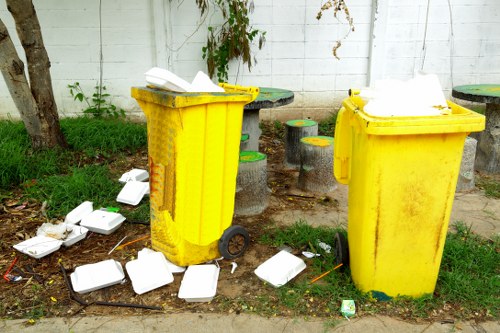
Office clearances often produce a mixture of materials, so the disposal route should be matched to the contents rather than treated as one single load. Wood, metal, plastics, upholstered furniture and general office waste can each require a different decision once the items have been collected. The more carefully the contents are sorted, the more efficiently the clearance can be managed and the easier it is to separate items suitable for recycling from those that need disposal.
That is particularly relevant where an office is being emptied after a change of use or a refurbishment. Some items may have little remaining value, while others can still be suitable for reuse or component recovery. In practical terms, this means the service is not only about carrying things out of the building; it is also about recognising which items can be handled in the most sensible way. We aim to keep the work orderly and proportionate to the contents involved.
Ask for a quotation if you want a service that considers both the clearance itself and the destination of the items being removed. A clear plan is especially useful when the workplace contains mixed furniture, storage pieces and old equipment that need sorting before removal.
About Chigwell
Chigwell is a settlement in the Epping Forest district of Essex, on the edge of Greater London’s eastern fringe, with a long history shaped by its position between countryside and expanding urban areas. The area includes a mix of residential streets, older buildings and more recent development, while the surrounding landscape is strongly influenced by Epping Forest and the wider Lea Valley corridor. Its name is well established in local history, and the parish and settlement have been noted for centuries in records connected with the county’s changing administrative and social geography. Chigwell’s character has often been associated with its village centre, nearby green spaces and links to neighbouring places such as Chigwell Row and Barkingside. The area is also served by Chigwell station on the Central line, which connects it with east and central London, while local roads link it to the wider Essex and north-east London network. Around the settlement are parks, wooded stretches and open land that give the district a greener feel than many places closer to the capital. The architecture varies from older domestic buildings and period homes to twentieth-century housing and newer infill development, creating a varied streetscape rather than a single uniform centre. Local churches, schools and community facilities contribute to the everyday life of the area, and the presence of nearby natural landscapes has long been part of Chigwell’s identity. Its position between suburban growth and protected green space has helped maintain a distinctive local profile.
Office clearances for moving, remodelling or closure

There are several reasons a business may arrange an office clearance, and the work can be tailored to the stage of the property. Some customers need to empty one floor before refurbishment, while others are preparing a whole unit for surrender at the end of a lease. In both cases, the priority is to remove the agreed contents in a sensible order so the premises can move towards their next use without avoidable delay or confusion.
We can support clearances where the office contents are still in use during part of the process, as well as those where the space has already been vacated. If the job involves phased removal, it is often better to divide the work by area or item type so that essential equipment is not disturbed too early. Keeping the layout in mind helps the clearance stay focused and allows the remaining items to be left undisturbed for as long as needed. When you are ready, request a quotation and we will discuss the most suitable sequence.
The service is also useful where office contents are mixed with general business furnishings. Reception furniture, archive storage, ancillary chairs and occasional tables can often be handled together, provided the route through the property is clear. For many customers, the real benefit is having one planned clearance rather than piecemeal removal spread over several days.
Handling access, timing and site conditions
Every office clearance benefits from a straightforward view of the site conditions before the work begins. Lift access, shared corridors, loading restrictions and parking availability can all affect how the removal is organised. If the office is in a larger building, it may also be important to consider whether the clearance needs to take place outside core business hours or alongside other occupiers. The practical aim is to keep the movement of items under control and to avoid unnecessary interruption to neighbouring spaces.
Timing matters too when the contents are being cleared from a working environment. In some cases, it is better to concentrate the removal into one planned period; in others, a phased approach is more suitable so that essential operations can continue. Where access is limited, larger items may need to be taken out before smaller ones, or the work may need to be organised around door widths and loading points. Clear information at the quotation stage makes it easier to set expectations and plan the sequence properly.
If you are preparing for an office clearance in Chigwell, it is worth checking which areas are available, what remains in use and whether there are any items that need special handling. That practical groundwork supports a tidier, more efficient service and reduces the risk of hold-ups once the clearance starts.
Common office contents we remove
Office environments often contain more than just desks and chairs. Storage rooms, staff areas and meeting spaces can hold a wide range of items that all need a practical removal plan. Depending on the job, that might include whiteboards, lockable cabinets, shelving, side tables, reception seating, noticeboards and loose workplace furniture. Some of these pieces are easy to move but awkward to stack, while others are heavier and need proper lifting and positioning to leave the property safely.
We also deal with contents that arise from gradual workplace change. A business may have replaced some furniture already, or it may have accumulated items that no longer fit the current layout. Clearances can then be built around what needs to go now and what must remain in place for continued use. That kind of selectivity is often useful when a customer wants space cleared without emptying the room entirely. It keeps the work flexible and focused on the actual outcome needed.
For a straightforward discussion of your office contents, ask for a quotation and share the basic room layout or item list you have available. That gives us a strong starting point for planning a suitable removal approach.
How the quotation process is usually shaped
A useful quotation starts with the essentials: what is being removed, how much there is, where the items are located and whether the property presents any access limitations. That information helps build a realistic estimate of the work involved and makes it easier to compare options. The purpose is not to overcomplicate the process, but to make sure the proposed clearance matches the size and shape of the actual job.
For office work, it is also helpful to know whether the contents are mixed furniture, storage items or broader business waste. A clearer description of the load allows the removal plan to be tailored more effectively, especially if some pieces need to be dismantled or handled separately. If you already know which areas are being cleared, that can improve the accuracy of the quotation and reduce the need for follow-up detail later on.
Get in touch for a quotation if you want an office clearance arranged around your premises and contents in Chigwell. A few practical details are usually enough to begin.